
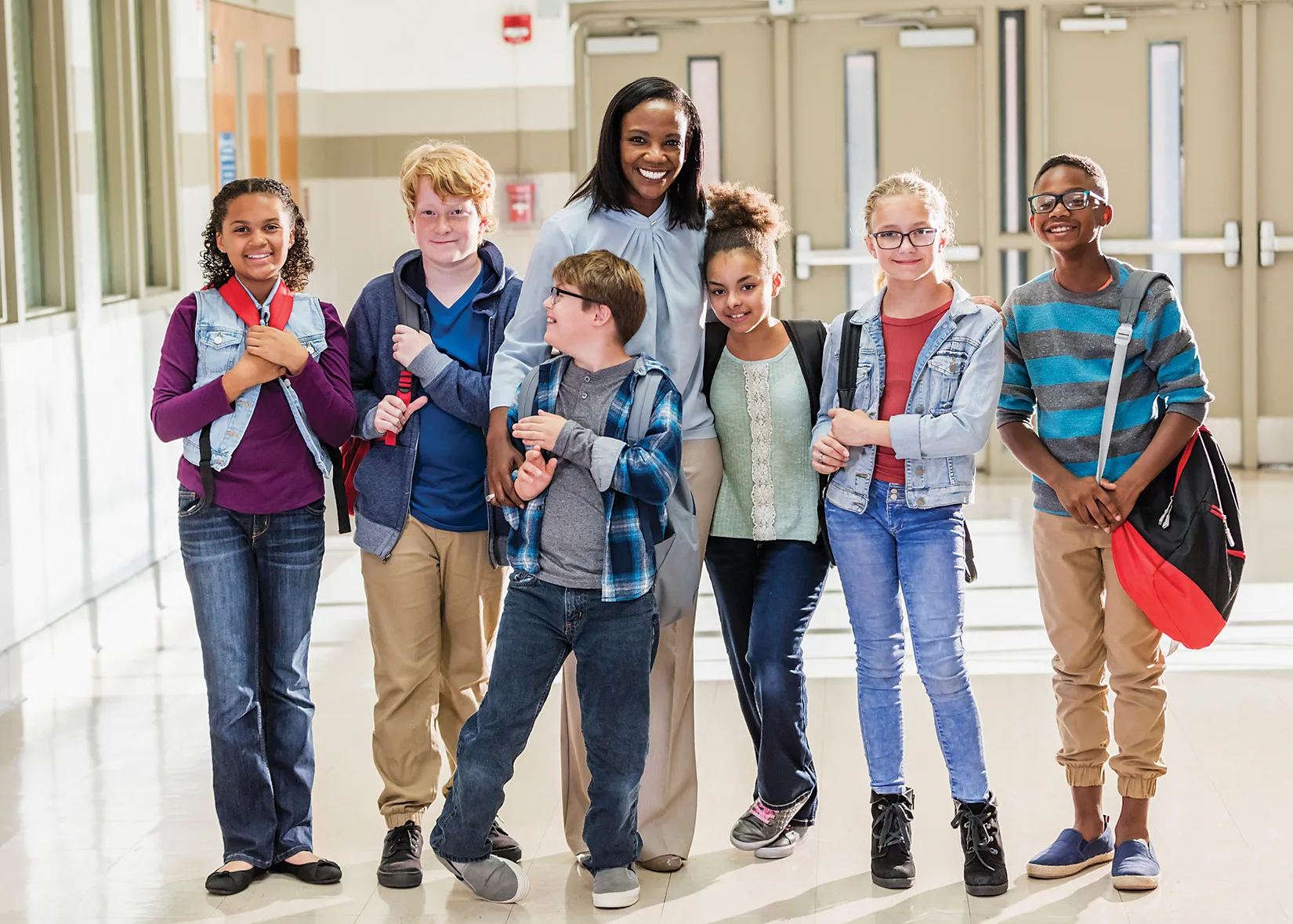
Middle school presents new academic, social and emotional issues for students of all abilities, including those with special needs.
By Ginny McCabe
Navigating Academics
Often, academics become more of a focus for students in middle school. Tweens may move to bigger schools, and switch classrooms as they juggle multiple subjects and teachers.
“Common examples of a student struggling might be forgetting homework at school or forgetting to turn in homework once they get to school, and not being able to break down larger projects and getting frustrated, leaving everything to the last second and staying up all night — we get a lot of those phone calls,” says Sarah Rintamaki, executive director of Connecting for Kids.
Rintamaki says some of the biggest needs or concerns middle schoolers have are executive functioning and social skills.
According to Julie Billiart Schools, you can focus on creating good habits and taking small steps to help them with those skills, including:
Organization: Developing a simple, reliable system for lockers, school supplies and digital files so they don’t lose their hard work.
Visual Anchors: Use checklists or micro-schedules on a desk or whiteboard. These act as an “external brain,” taking the pressure off their working memory.
Daily Rhythms: Build in time each day to get ready for the tasks ahead. Start each morning with two minutes to check their bookbag for completed assignments, school supplies, and even their lunch or snack. When this becomes a habit, it stops feeling like a chore.
Low-Stakes Practice: Give kids the chance to try new things in a safe, supportive environment where it’s okay to make a mistake. This builds the muscle memory they’ll need for high school.
Peers and Social Media
Social dynamics is another major area of concern for parents, Rintamaki says.
“Everybody thinks about it as being the kid who is excluded because they are awkward, but we also get phone calls from parents where the kid, maybe, is being labeled a bully, because they’re either not reading the social cues correctly, or they wait until they get so frustrated that they say something impulsive that might be a little bit mean,” she says.
Julie Billiart Schools provides some practical advice on how to navigate peer interactions:
Practice: Role-play simple moments, such as how to ask a teacher for a quiet place to work or how to join a group at lunch.
Find Their Tribe: Encourage participation in clubs, sports, or local social groups where they can practice social skills while doing something they enjoy.
Validate the Effort: Acknowledge how much energy it takes for them to stay organized and regulated. A little bit of encouragement goes a long way in building their self-advocacy.
Rintamaki says that as kids learn social media, they sometimes make mistakes that can get them into trouble. “We hear a lot of those stories, and your kid is not the only one who made a mistake on social media, or reacted in a way that was unkind,” she says.
“Your job is not to make it so they don’t struggle,” Rintamaki adds. “Your job is to say, this is what they are struggling with, and how do I give them some resources to help them to continue to make progress.”
Emotional Well-Being
and Mental Health
Middle schoolers can face mental health challenges including anxiety, depression and issues with their self-esteem. Youth with poor mental health may struggle with school and grades, decision-making, and their health.
Ali Trotter, deputy executive director at Bellefaire JCB, notes that anxiety in youth has been on the rise, in addition to school functioning, such as youth who have school refusal .
“I would say we have had a very high increase in referrals for individuals on the autism spectrum and depression,” Trotter says. “We’ve also had a number of families come to us concerned about their kids’ risky behaviors. The one thing I would always say to a parent is to look for significant changes in their kids, such as a drop in academic performance, sleep issues, isolation, seemingly sad, or anything that looks out of the ordinary for their child.”
Trotter advises parents to “check in with their kids, and do their best to link them to services. Start with the schools. Many schools in our communities have mental health professionals available. ”
She adds, depending on where they live, they should connect to their local community mental health organizations or reach out to their local mental health boards.
“What’s important is for families to not see mental health services as a stigma, but to see them as positive resource,” Trotter says. “I think families sometimes feel like diagnosing their kids or identifying weaknesses in their kids is a negative thing, but truthfully, identifying and getting help for the kids is really beneficial and positive. ”
Bellefaire JCB
bellefairejcb.org
Connecting for Kids connectingforkids.org
Dr. Jay Berk jayberkphd.com
Julie Billiart Schools
juliebilliartschool.org
LifeAct lifeact.org
Ohio Guidestone ohioguidestone.org
Peak Potential Therapy peakpotentialtherapy.com
Therapy and
Wellness Connection therapyandwellnessconnection.com