
By Leslie Tischler, Intervention Specialist at Julie Billiart Schools
Social-emotional learning and development can be an integral component of early childhood education, especially in K-2 classrooms. Before children can fully understand and engage in academics, they need the skills to manage emotions, build relationships, and navigate classroom expectations. This can look like developing resilience, emotional regulation, self-awareness and conflict resolution.
Students may encounter challenges at school that can impact their development. For example, a child who becomes frustrated by a hard math problem may struggle to regulate their emotions, leading to behaviors that interrupt learning. Similarly, difficulty reading social cues or controlling impulses may disrupt the classroom, making it harder to stay engaged.
Social-emotional learning goes beyond the classroom. Families play a crucial role in supporting this growth and development.
Here are some strategies parents/caregivers can help support their child in small but effective ways at home.
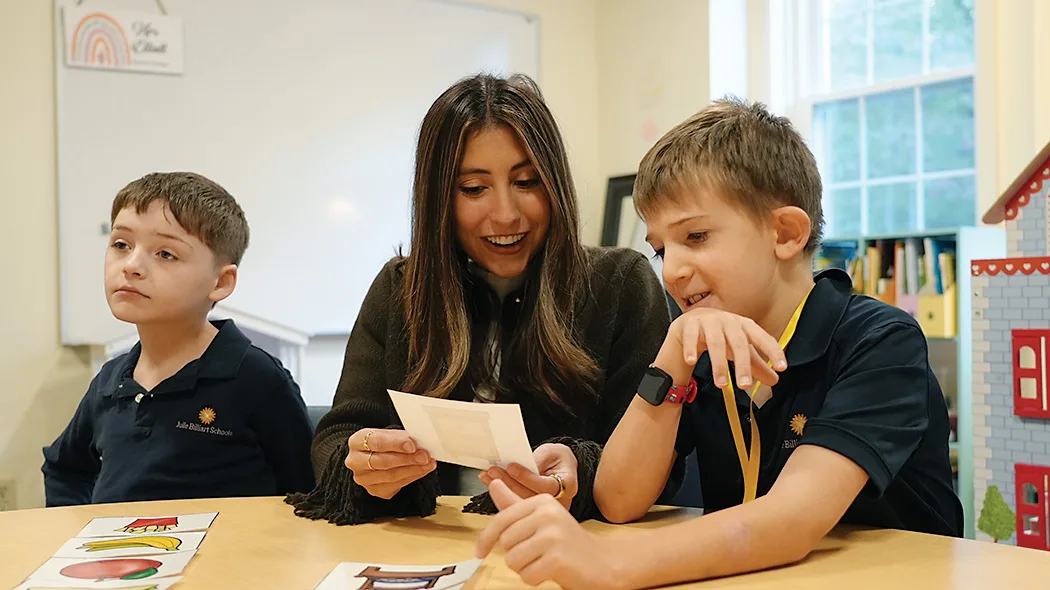
- Use emotion cards in the moment to teach facial expressions and feelings or use them to prepare for upcoming events and experiences
- Model healthy coping strategies. Saying, “I’m
feeling frustrated, so I’m going to take deep breaths to calm my body,” helps children recognize emotions and learn appropriate ways to cope. - Read to your child. It introduces new words and ideas while being able to draw from the story to identify feelings and emotions.
Families and schools can work together to strengthen children’s social-emotional skills. This empowers children to develop confidence, resilience and self-regulation needed for success both academically and beyond the walls of the classroom.