
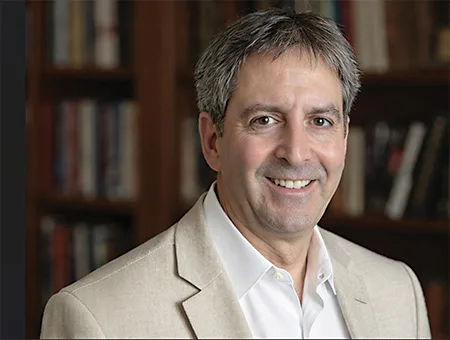
Jonathan Naft, a nationally-recognized leader in the field and Certified Prosthetist Orthotist, founder and president of Geauga Rehabilitation Engineering (GRE), shares his unique perspective as an electrical and biomedical engineer and clinician with decades of experience in product innovation, patient care, and national reimbursement and coding initiatives.
By Lindsey Geiss
It’s an exciting time for patients working to improve function and mobility,” Jonathan Naft, CPO, shares. “Advancements in computer-controlled technology and material science for prosthetics and orthotics (O&P) — including powered braces and exoskeletons — are removing limitations and improving health in ways never before thought possible.”
Navigating the world of O&P can be overwhelming, and it is easy to get swept up in Hollywood’s depiction of magical bionic limbs and suits. However, new innovations are quickly bridging the gap between sci-fi and reality. The one-size-fits-all approach of the past has given way to personalized solutions, with modern devices like Hero Arm promising to “turn limb differences into superpowers” and MyoPro®, the only wearable myoelectric device, restoring function to paralyzed arms and hands.
Naft spoke with LiveSpecial.com to demystify the technology and outline real-world possibilities.
This interview has been edited for length and clarity.
Why is this an exciting time for the prosthetics and
orthotics industry?
Naft: The acceleration in the last two to three years with powered braces is remarkable. There is such an opportunity to make a difference with new technologies. It’s amazing how the programmability and movement keeps improving. We are really running with AI to advance not only manufacturing and 3D printing, but also personalized rehabilitation. Devices can now sense and adapt to the individual’s movements and gait patterns.
To get a sense of how much growth is taking place in the field, I helped lead the development of the world’s first powered arm brace, MyoPro, starting in 2012, and the upgraded MyoPro 2 launched in 2017. Today, powered braces for the arms and legs are covered by major insurance companies across the United States, and the growth is happening in countries outside the U.S., too. It’s remarkable to see how patients now have options of different technologies for improving the function of their arms and legs.
Who can benefit from O&P?
Prosthetics and orthotics can address musculoskeletal and neurological conditions ranging from limb loss or limb differences to spinal cord injuries, multiple sclerosis and muscular dystrophy, cerebral palsy, post-polio syndrome, ALS or stroke. Full exoskeleton suits, which hold patients up and act as entire robotic legs and hips to walk for them, are growing beyond spinal cord injury patients with little to no muscle function. The rigid framework is worn over clothing. A wearable bilateral single-leg system, for example, has broader application, providing additional strength and stamina for functioning legs.
The majority of power brace and exoskeleton technology is for adults. However, the Agilik™ mobility device, for example, can be used by children. This power-assisted smart orthosis is designed to be attached to a custom-fabricated Knee-Ankle-Foot Orthosis (KAFO). It uses advanced sensors and joint motors but does not initiate movement. The manufacturer hopes to help patients with disorders like cerebral palsy and spina bifida “stand taller and walk stronger” — even “stop or reverse” the deterioration in strength and endurance that patients often experience over time.
Beyond the medical field, power braces and exoskeletons in the industrial and commercial sector make up close to a billion-dollar industry, for use in assembly lines, for example. The military also uses them to enhance capability.
How can I find a device that is right for me or my loved one?
Certified Prosthetist Orthotists (CPOs) are highly trained healthcare professionals and clinical experts who specialize in designing and fitting artificial limbs (prosthetics) and custom braces (orthotics and exoskeletons). We collaborate with physicians — who diagnose the condition and write the prescription for the device, as well as physical therapists (PT for legs and large body movements/balance) and occupational therapists (OTs for arms and daily life tasks) to help patients regain mobility, independence and confidence. Always talk to your primary care doctor first. They can refer you to a local specialist, including PT or OT.
How do these advanced devices work?
Prosthetics can be passive, body-powered or electric. Myoelectric limbs, powered braces and exoskeletons are controlled by muscle signals. The technology is less like “Iron Man” and more like “Avatar.” However, to be clear, they do not have magical powers or endless energy. You have to make them work, so they require intense therapy and training, as well as a battery power source.
Similar to how Siri listens to a sound wave for a computer chip to process an algorithm and give you the weather forecast, for example, these devices listen to electromyographic (EMG) waves from muscles. Just as some people speak softly, a disabled person has more faint and garbled waves. However, they can be amplified, read and interpreted to make them usable. If my able-bodied arm is a 10 out of 10 threshold, the muscle of someone who has MS, a spinal cord injury or a stroke might be a 2 out of 10 output, which gets amplified to 10 to signal to the motor. The patient decides when to move and varies the intensity of their own EMG to control how fast or slow the arms or legs go. Sensors read the signals on the surface of the skin. Microprocessors and the arrays of sensors, including tilt, force and pressure sensors, combined with gyroscopes, allow patients to sit, stand or walk when they’re ready. Same for bending arm joints such as elbows, wrists, hands and fingers.
How are the devices made?
In the 1960s and 70s when people got braces, like in the movie “Forrest Gump,” a craftsman would sew leather and use heavy metal. Materials now include carbon fiber and lightweight plastics. Today we use high-tech 3D scanners to create a full digital body image and computer model, then each product is custom 3D printed for the individual patient. The 3D printer builds them with composite plastics, one dot at a time, to form a solid brace from millions of points. New software even enables 3D shape scanning technology on mobile devices. MyoPro fabrication, for example, takes about two weeks, following an evaluation, measurements and molds. Finally, there is a fitting and OT to meet goals we set with you.
What are the downsides or limitations?
These technologies can be big, bulky and heavy, sometimes requiring help to get them on. However, they are still usable and each new generation gets smaller and smarter. They are also expensive, ranging in price (or Medicare/insurance allowance) from $30,000 to $100,000. It is worth noting that price does not equate to better quality or outcomes, just more motors and complex functionality based on severity and need. They also have to fit like a glove. Statistics show people are less apt to use them if they’re not comfortable.
Is O&P covered by insurance?
A big reason for excitement and growth in R&D is that for the first time insurance will cover these devices, including powered braces. Medicare has led the way, with the VA and Workers’ Compensation also covering them, and some private insurers have as well. It is important to ask your insurer and check whether a specific plan does or does not cover these technologies. Original Medicare from the government will pay if you meet the need, while some Medicare Advantage plans will deny coverage.
The FDA classifies these as Class II medical devices, which require a prescription. When patients come to GRE for a custom fitting for a MyoPro, for example following a stroke, we help you obtain clinical records and complete a thorough evaluation. The MyoPro is covered by most major payors under your durable medical equipment coverage for prosthetics and orthotics.
How have you seen this technology heal patients
and change lives?
Patients are told, “You may never use your arm or walk again,” then devices help them do just that. In my practice and while working with Paralympic athletes, I’ve seen what is truly classified as the triumph of the human spirit. If I had to make a prediction, in the immediate near future, the Paralympic games will be as equally televised and exciting as watching able-bodied athletes compete. We are already seeing amputee patients run as fast, if not faster, than pro athletes. And I’m excited to watch those with injuries such as stroke or spinal cord equally compete by use of powered exoskeletal devices.
How can we learn more?
Always talk to your physician, OT or PT. For specific questions about devices, reach out to local O&P providers, like GRE (greop.com). ExoskeletonReport.com is a resource for news and information on wearable robotics, exoskeletons and exosuits. It offers a catalog of all devices on the market and companies across the consumer, industrial, medical and military spaces. The American Orthotic & Prosthetic Association trade group offers a locator tool at AOPAnet.org. More information on MyoPro can be found at myomo.com and Hero Arm at openbionics.com